On April 11, 2022, the National Weather Service put metro Las Vegas under a dust storm warning, with gusts over 60 miles an hour near the state line on I-15, as FOX5 Las Vegas reported. Picture coming home the next morning to a front door key that feels gritty going in. You push a little harder, give it a twist, and half of it snaps off inside the deadbolt. We know that sick feeling, and we also know the lock is nearly always fine if you stop and do the next steps in order.
To get a broken key out of a lock, turn the cylinder back to the spot where the key first went in, puff in a little dry lube, then pull the piece straight out with needle nose pliers if it sticks out, or hook it with a thin extractor if it sits flush. Skip super glue and magnets, because glue can seal the lock shut and most keys are not magnetic.
- The pins only drop out of the way when the cylinder sits in its home spot
- Schlage tells its own techs to use graphite or a similar dry lube in cylinders
- Pliers work only when part of the blade sticks out past the keyway
- A thin double hook extractor or a jigsaw blade reaches a piece that sits flush
- Thin liquid super glue flows into tight gaps, which is why it can glue the lock itself
- Keep both halves, because a locksmith can often cut a new key from them
Why Keys Snap Inside a Lock
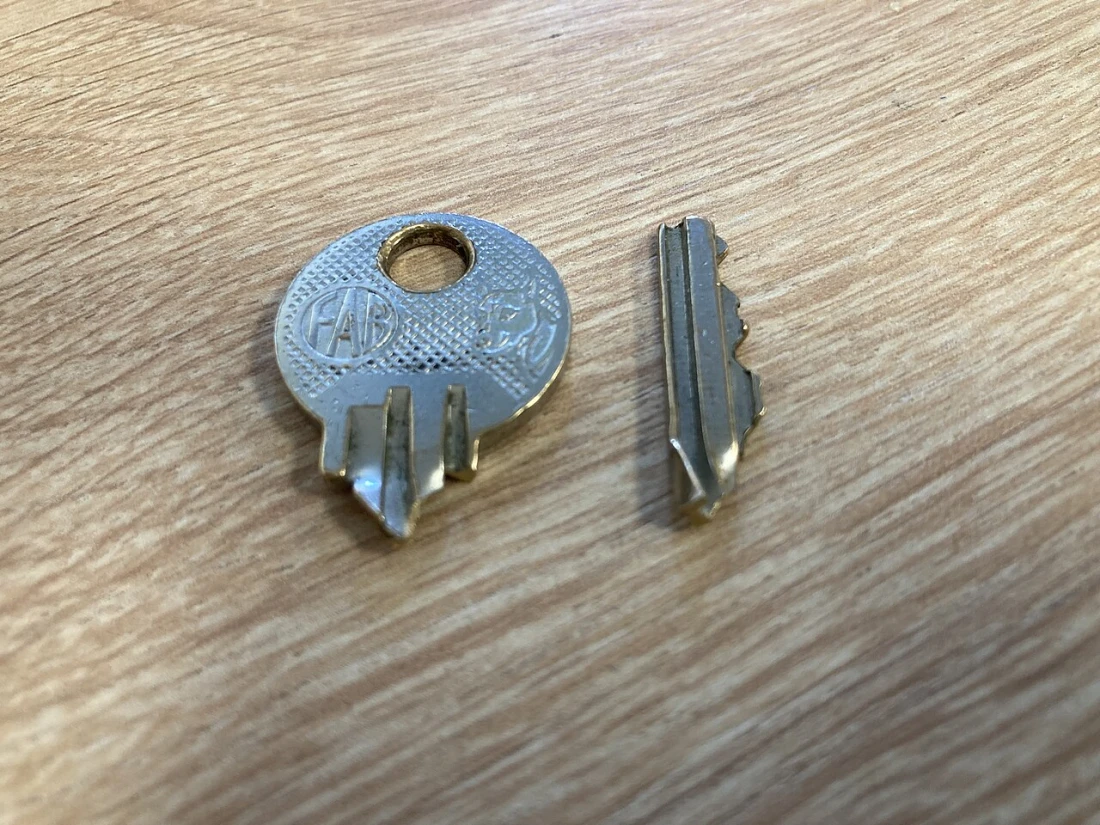
House keys are made of soft metal. Bob Vila notes that most keys are brass or nickel, which bend and wear a little every time you turn them. Over the years, the blade gets thin right where it meets the head. One hard twist finishes it.
A dirty lock makes that twist more likely. Schlage's A Series service manual warns that locks in dusty or dirty areas can get slow as grit works into the grease. That is life in the Las Vegas valley. When the key drags, you push harder, and the weak spot gives out.
Three other things snap keys often. A cheap copy cut from soft blank metal, a key used as a pry tool or bottle opener, and a bent key you tried to straighten. If yours broke for any of these reasons, the copy you have left is probably close to breaking too.

Match the Break to the Method
Look into the keyway with a phone flashlight before you grab a tool. How much metal you can see decides what will work. Find your row, then follow that section below.
| What you see | Best method | What can go wrong | Stop and call when |
|---|---|---|---|
| Some blade sticks out past the lock face | Needle nose pliers or strong tweezers, pulled straight | Twisting snaps the piece again, shorter | The piece slips twice and moves deeper |
| Blade sits flush with the face of the lock | Thin double hook extractor or a jigsaw blade | A thick tool wedges the piece tighter | Nothing will slide in beside the blade |
| Blade is deep inside and you see only a sliver | Extractor only, after lube | Pushing drives it past the last pin | You cannot see the blade at all |
| Cylinder is turned sideways with the piece in it | Turn it back first with the broken head or a flat tool | Pulling while turned catches every pin | The cylinder will not turn back |
| Door is locked and you are outside | Get help to get in, then deal with the piece | Forcing the lock ruins it and the door | Right away, if there is no other way in |
If the key broke with the door open, do not close and lock it. Leave it unlocked until the piece is out, or you could lock yourself out with a lock that no longer takes a key.
Before You Pull Anything
Most failed tries go wrong in the first ten seconds. Do these three things first, in this order.
- Turn the cylinder home. The key only comes out where it went in, usually with the slot straight up and down. If the break happened mid turn, use the broken head or a small flat screwdriver in the slot to rotate it back.
- Do not push. Never put another key or a fat tool in to test it. That shoves the piece deeper.
- Add a little dry lube. One short puff into the keyway is enough to let the piece slide.
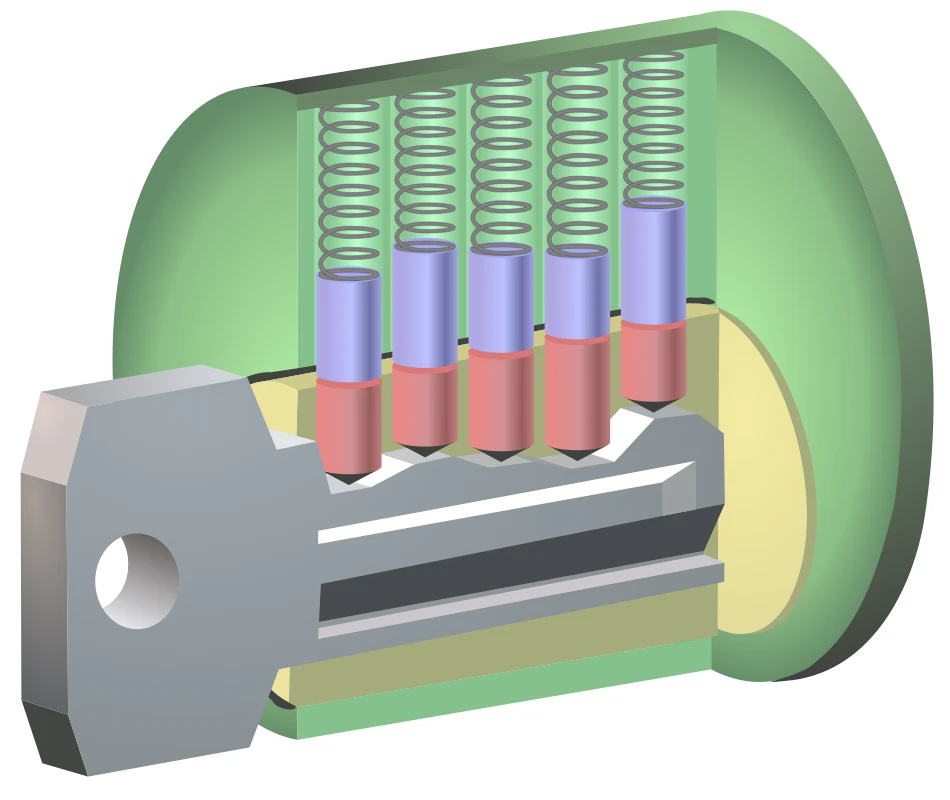

Pick the lube with care. The Schlage manual says to use only graphite or a similar material in a cylinder, and to blow in a small amount. Its core manual adds a warning that too much graphite leaves the springs no room to compress. Bob Vila calls graphite powder the best choice unless you live somewhere humid, which Las Vegas is not.
A dry PTFE spray works too. WD-40 sells a 3-In-One Lock Dry Lube that dries within minutes so it does not attract dirt, according to VehicleServicePros. Regular wet WD-40 is a last resort. Its film collects dust, and in the desert that means a gritty lock next month.
How to Pull It Out With Pliers
This is the one to try first whenever any blade shows past the face of the lock. Use needle nose pliers with fine tips, or strong pointed tweezers.
- Grip as much of the blade as you can, flat side to flat side.
- Pull straight out, slowly, with no twist.
- If it will not move, wiggle up and down a tiny bit while you pull, not side to side.
- If the tips slip off, stop after two tries. Each slip can push it back in.
Tweezers only work when the piece sits right at the edge. Most are too thick to slide in beside the blade, so they push instead of grip.
How to Hook a Piece That Sits Flush
When nothing sticks out, you need something thin enough to slide in along the top or bottom of the blade and catch a cut on the way out.
A broken key extractor. This is a thin steel strip with a small hook or barbs at the tip. Hardware stores and online shops sell them in sets. Bob Vila points out that sets come with hook, spiral and sawtooth styles, and that a double hook has a better chance than a single one. Slide it in along the cut edge of the blade, teeth pointing toward you, turn it a hair so it bites, and pull.
A jigsaw or coping saw blade. A thin saw blade does the same job with the teeth pointed out of the lock. Snap or grind it down so it fits the keyway, slide it in on the cut side of the key, press up so the teeth catch, and draw it out.
A paperclip or bobby pin. These bend too easily for a stuck piece, but a small hook bent into the tip can pull a loose one. Two together, one on each side of the blade, grip better than one.
Give each tool three or four careful tries. If the piece moves a little each time, keep going. If it goes nowhere, the pins are holding it, and more force only scratches the cylinder.
Tricks That Make It Worse
Super glue. Online videos show someone gluing the two halves back together inside the lock. The problem is how thin liquid glue is. Loctite describes its liquid super glue as free flowing and able to get into cracks and tight spaces. A lock is nothing but tight spaces. One drop that runs past the blade can glue the pins and turn a pull job into a new lock.
Magnets. They only work on steel keys. Most house keys are brass or nickel silver. Brass is a mix of copper and zinc, and neither is magnetic, so brass is not either, explains chemistry educator Wayne Breslyn. Test the head you still have. If a fridge magnet will not hold it, it will not pull the rest.
Drilling or hammering. A drill goes through the pins and the piece together, so the lock is done. Hammering a screwdriver in can crack the cylinder or bend the cam behind it. Save the drill for when the lock is getting replaced anyway.
Car Doors, Ignitions and Padlocks
Car door locks sit in a thin door with rods and clips behind the cylinder. Pushing a piece too far can drop it out of reach into the door. Use pliers or a thin extractor only, and stop sooner than you would at home.
A key that broke in the ignition is a different case. Do not try to start the car with the stub left in the slot. Read our steps for a key stuck in the ignition first, since the cause is often the shifter, not the key. If the car key has a chip in its head, the new one will need cutting and often programming, which our key replacement team handles on site.
Padlocks are small and cheap. If a broken key will not come out after a few tries, cutting off a padlock you own and buying a new one is often the faster fix. Gun safes, cash boxes and storage units are worth a locksmith, since the lock is part of what you paid for.
After the Piece Comes Out
- Keep both halves. A locksmith can often read the cuts off the two pieces and cut a fresh key from them.
- Do not copy the worn spare. If your other key is just as old, a copy of it copies the wear too. Ask for a key cut to the lock's original depths.
- Test the lock. Turn the new key through a full cycle five or six times. If it drags, lube the lock again or have it serviced.
- Think about a rekey. If the broken key came from a lost set or an old tenant, rekeying the lock makes every old copy useless.
Renting? Tell your manager or landlord before you drill, replace or rekey anything. The lock is usually their property, and many leases spell out who calls the locksmith.
Broken Key in Henderson or Las Vegas?
Hire a locksmith who can show a permit. Under NRS 655.070, every Nevada locksmith needs a permit from the county sheriff, and the holder has to carry it at all times. Ask to see it before work starts.
Call Lockout Rescue at (702) 979-7566. We pull broken keys from house, business and car locks across Henderson and the Las Vegas valley, cut a new key on the spot, and set the price before we start.
Official Pages
| What we cited | Where it came from |
|---|---|
| Graphite or similar material only in cylinders, a small amount blown into the keyway, and grease fouled in dusty areas | Schlage A Series Service Manual |
| Too much graphite can stop springs from compressing, and work lube through with a key | Schlage Small Format Cores Service Manual |
| Keys made of brass or nickel, graphite unless humid, WD-40 as a last resort, double hook extractors | Bob Vila (updated February 23, 2024) |
| PTFE lock lube that dries within minutes and does not attract dirt | VehicleServicePros (February 19, 2015) |
| Liquid super glue flows into cracks and tight spaces | Loctite |
| Brass is copper and zinc and is not magnetic | Wayne Breslyn, University of Maryland |
| Dust storm warning for metro Las Vegas on April 11, 2022, gusts over 60 mph on I-15 | FOX5 Las Vegas |
| Locksmith permit from the county sheriff, carried at all times | Nevada Revised Statutes chapter 655 |